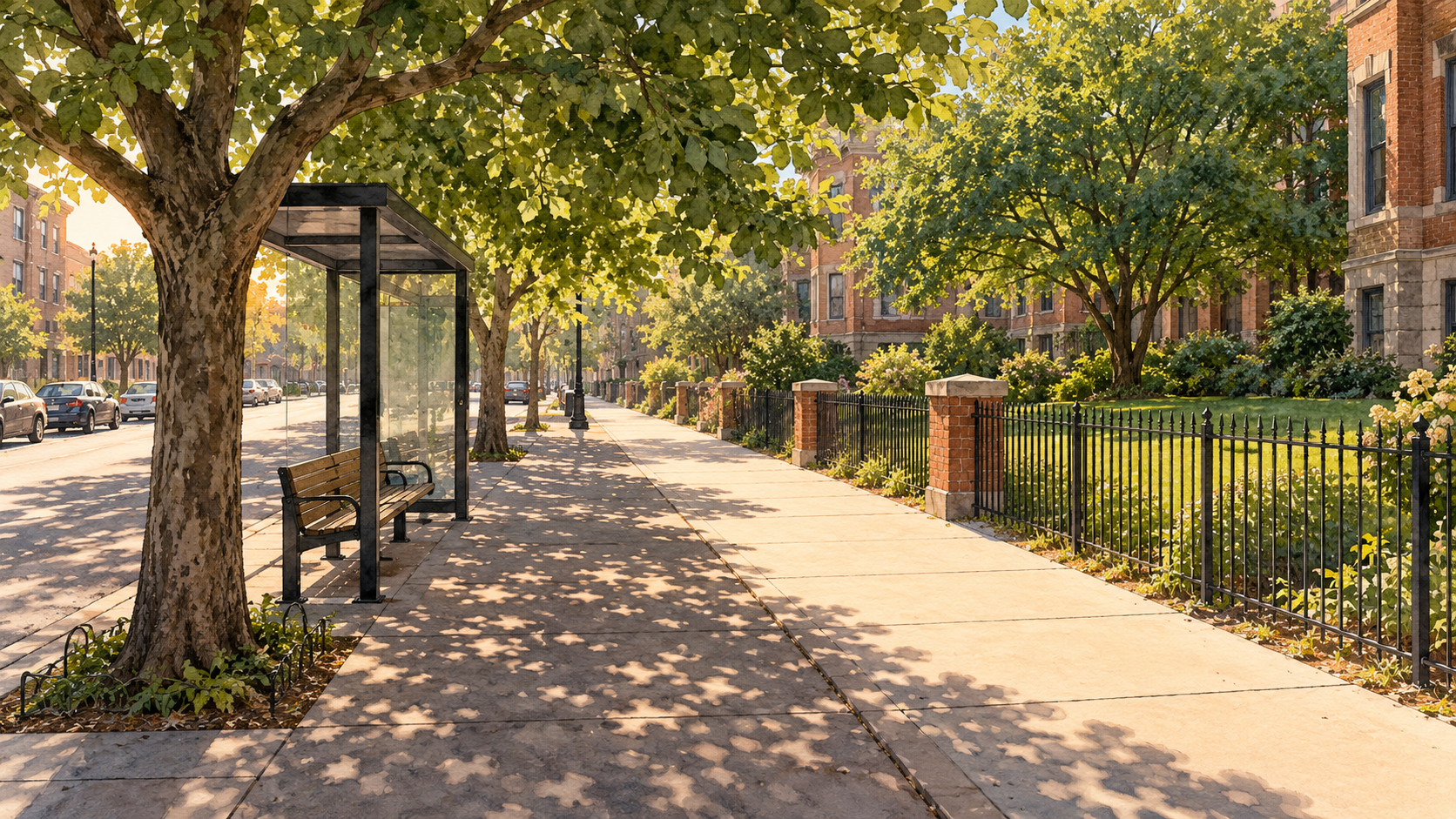
The difference between tree cover and useful shade
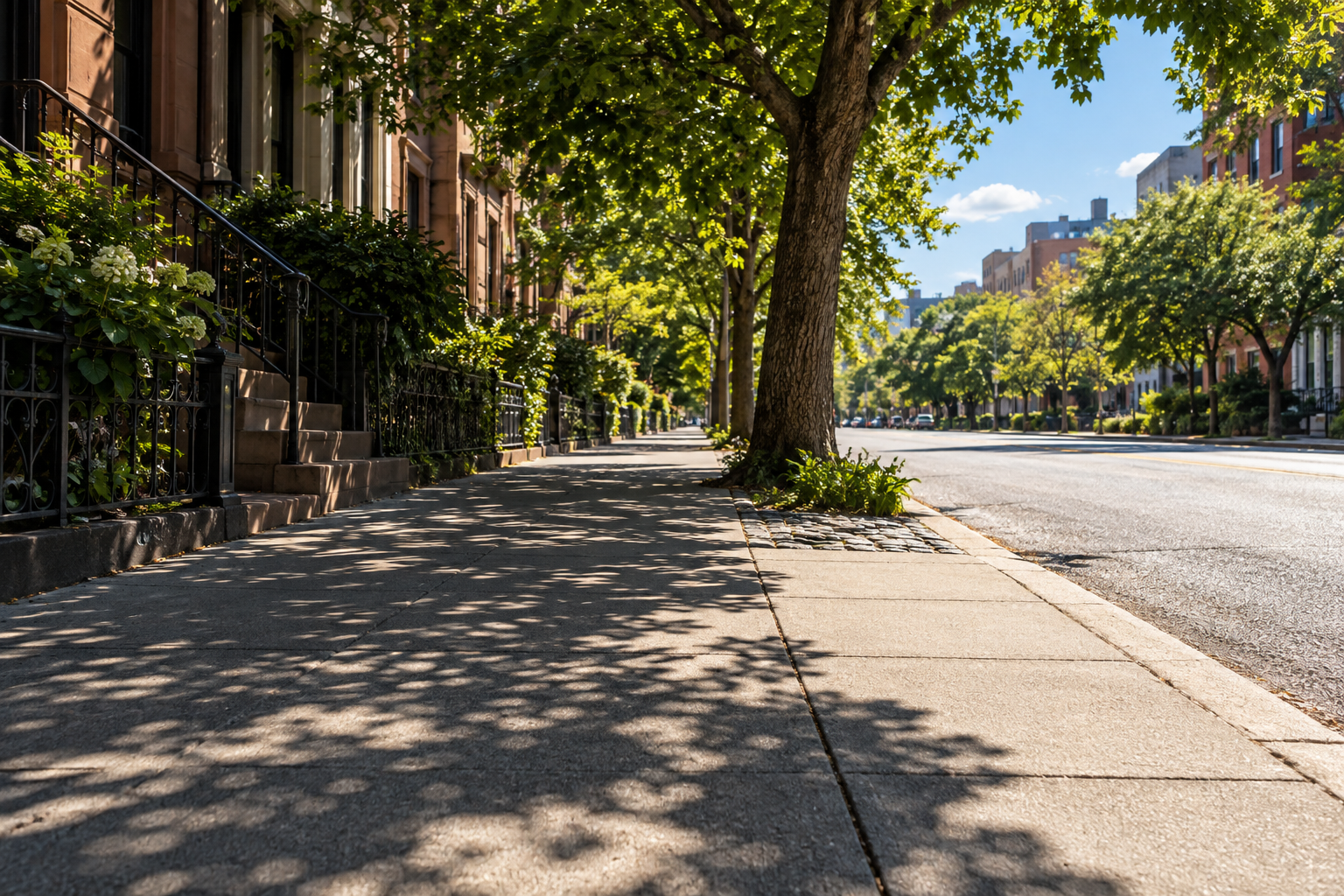
A canopy map sees crowns from above. Pedestrians meet moving shadows on particular pavements and at particular hours. Both views matter when a city plans for heat.
A place for slower thoughts
Urban trees, roots and the conditions that let a canopy endure.
Words by Theo Linden
A canopy map sees crowns from above. Pedestrians meet moving shadows on particular pavements and at particular hours. Both views matter when a city plans for heat.
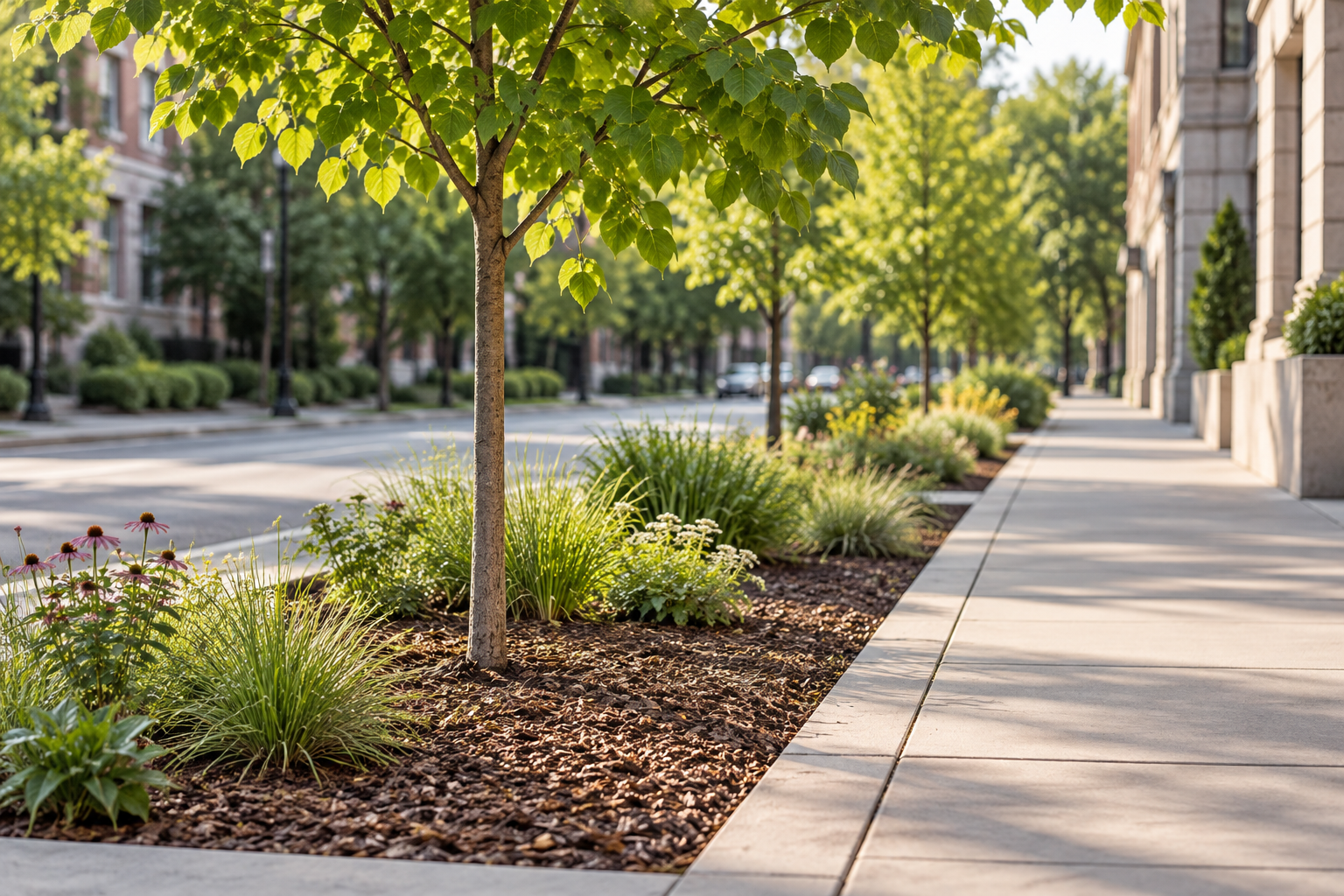
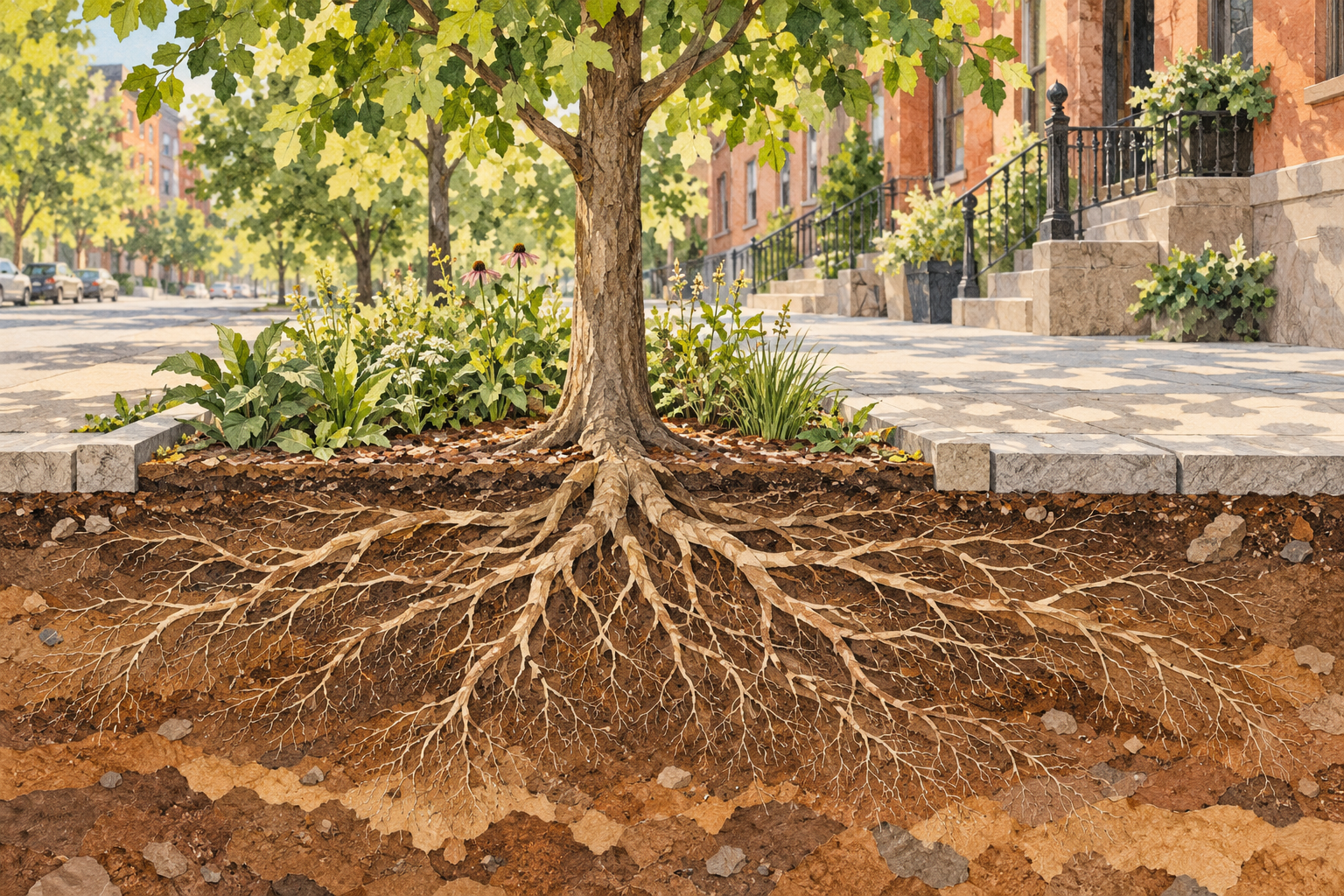
A planting hole fits a tree today. Its future depends on connected soil that roots can enter, breathe in and draw water from as the crown grows.
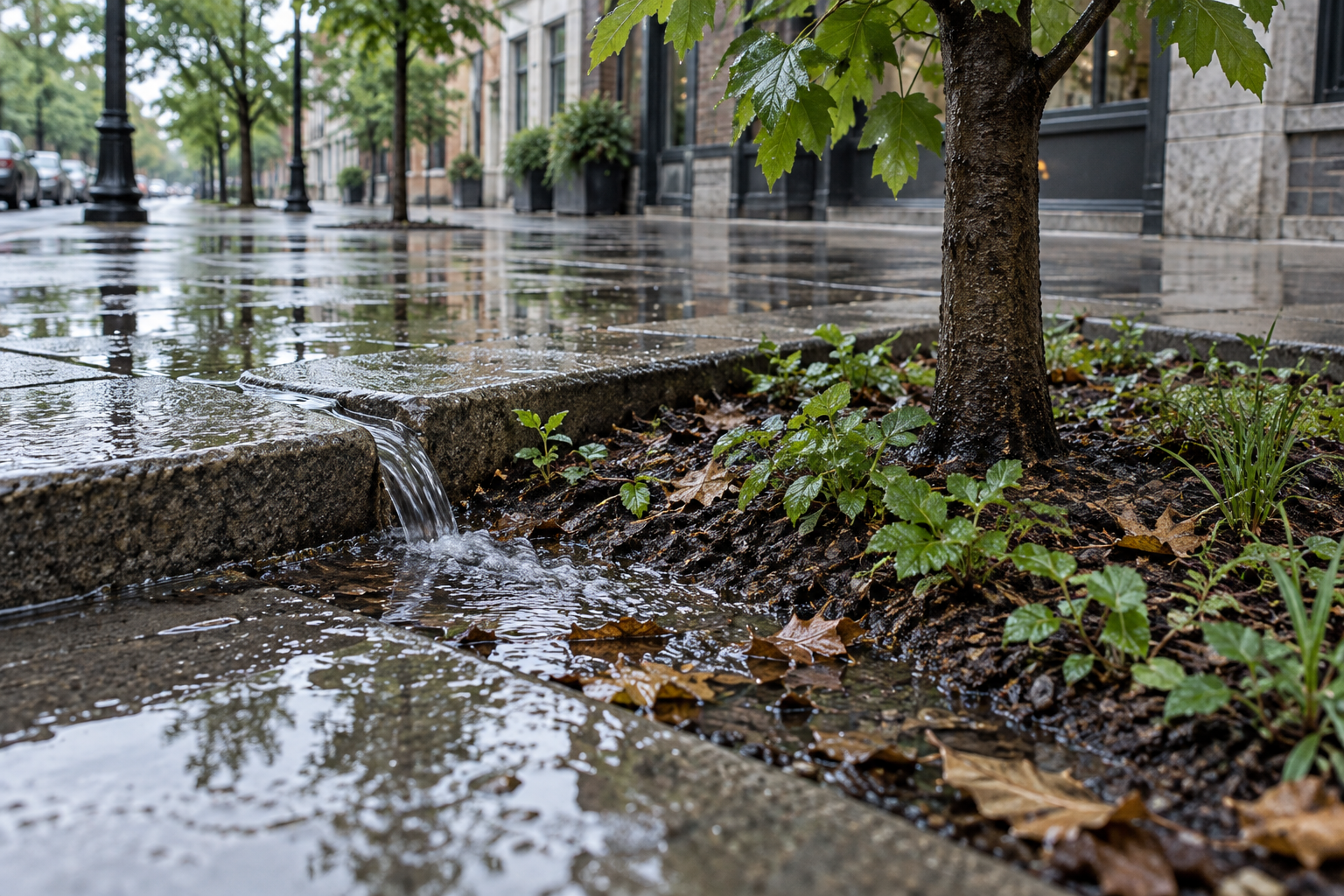
A street tree needs more than a shower over its crown. Its pit must receive runoff, admit it through living soil, and release excess water before the roots stay submerged.
Tree shade can sharply reduce the sunlight and surface heat a walker receives even when nearby air temperature barely shifts. Field studies show why the pedestrian's route, its surfaces and its hour matter to measuring relief.
A planting opening reveals little about a street tree's future roots. Soil condition, connected space and pavement design shape the canopy that can grow above it.